
Loading...
Serving Fortuna Foothills, AZ and surrounding areas. (928) 655-8262
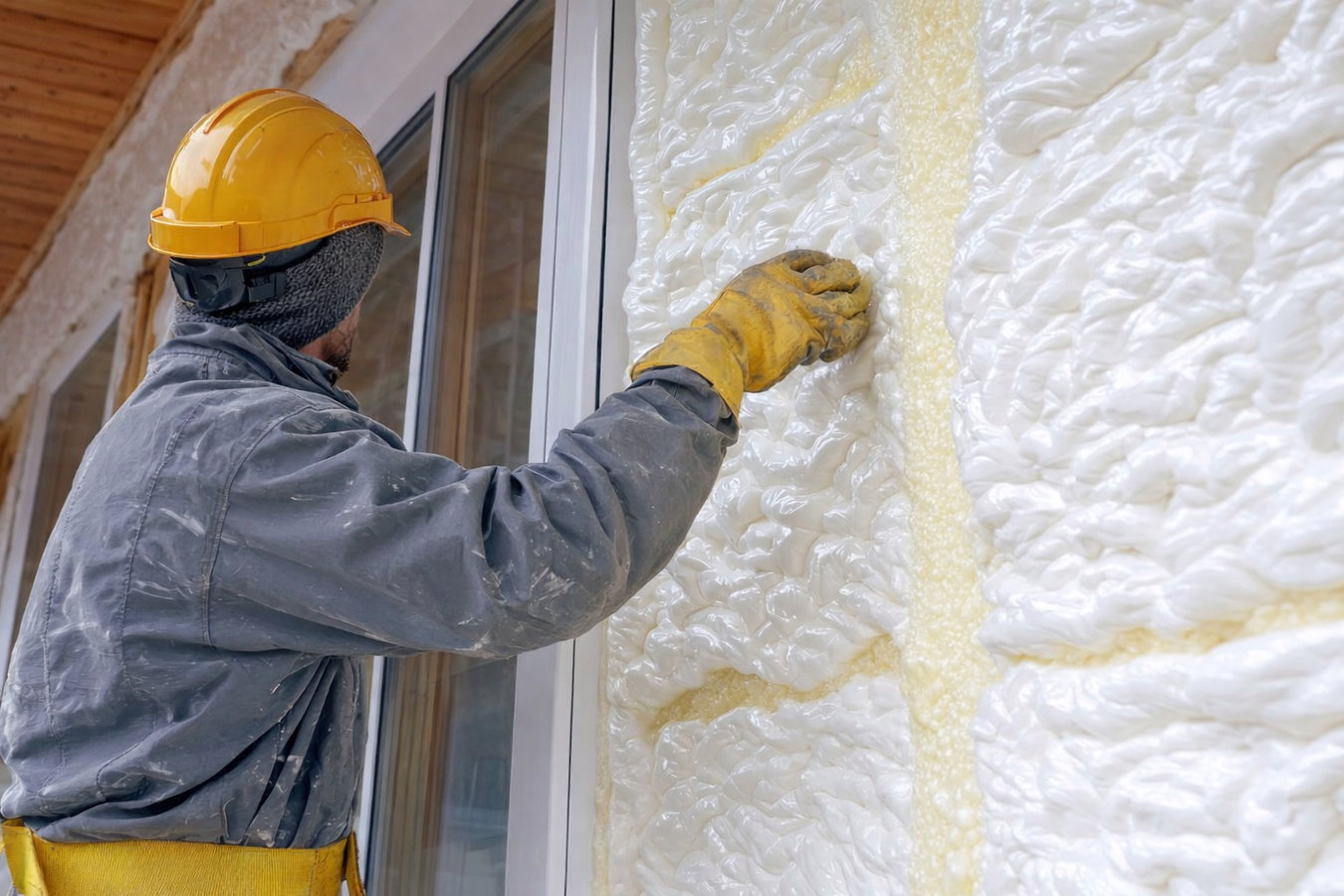
If your building runs hot from May through October and your energy bills reflect it, the insulation in your roof or walls is likely the problem.
If your building runs hot from May through October and your energy bills reflect it, the insulation in your roof or walls is likely the problem.
Commercial insulation in Fortuna Foothills creates a thermal barrier between the brutal outdoor heat and the spaces where your employees and customers spend their day. Most jobs involve attic spaces, flat roofs, or wall cavities, and a straightforward single-story project is typically completed in one to three days.
Many commercial buildings in the Fortuna Foothills and Yuma area were constructed in the 1970s through 1990s, when insulation standards were far less demanding than they are today. If your building predates the mid-2000s and has never had an upgrade, you are almost certainly paying more to cool it than you need to. The two most common places heat gets in are flat and low-slope roofs - which absorb enormous solar heat throughout the day - and wall cavities that were either under-insulated at construction or have settled over decades. Pairing a roof treatment with spray foam insulation for wall cavities is a common combination that addresses both entry points in one project.
If your air conditioning runs continuously and certain areas still feel uncomfortable by mid-afternoon, heat is getting in faster than your system can push it out. In Fortuna Foothills summers, a well-insulated building should maintain a consistent temperature without the HVAC working at full capacity all day. Dramatic utility spikes from May through September are a reliable early indicator.
If certain parts of your building are always noticeably warmer than others - especially areas directly under the roof deck - that is a classic sign of uneven or missing insulation. In the flat-roof commercial buildings common to Fortuna Foothills, the ceiling below the roof can act as a heat radiator if nothing is slowing the transfer. You should not need to avoid parts of your own building because they are too uncomfortable to work in.
Arizona adopted significantly stronger energy efficiency requirements for commercial buildings in the mid-2000s. If your building predates those changes and has never been updated, it was built to a lower standard than what is required today. That gap translates directly into higher cooling costs every single month from spring through fall, year after year.
Stand in your building around 3 or 4 p.m. on a hot July day and hold your hand near the ceiling or an exterior wall. If you can feel warmth radiating from the surface, heat is conducting straight through with little resistance. This is especially common in metal buildings and older masonry structures in the Yuma area that were built without adequate thermal barriers.
We handle commercial insulation projects for retail spaces, offices, warehouses, and mixed-use buildings throughout Fortuna Foothills and the wider Yuma County area. Every project starts with a free on-site walkthrough where we assess your current insulation, identify where heat is entering most aggressively, and provide a written estimate before any work begins. For flat and low-slope roofs - the most common commercial construction type in this area - we evaluate both rooftop rigid board and underside spray foam options and explain which approach suits your specific building and access situation. We handle the Yuma County permit application when required and coordinate the county inspection so that side of the project never becomes your burden. For property owners who also want to address attached or adjacent residential spaces, we can discuss crawl space vapor barrier work as a complement to the commercial project.
Our work does not end when the crew packs up. We walk through the finished installation with you, showing exactly what was installed and where, and give you documentation of the completed work. That paper trail matters when it comes to permit closeout, insurance, and any future property sale. Business owners who have had spray foam work done often also ask about spray foam insulation for specific wall cavities or mechanical room applications as a follow-up to the main commercial project.
Suits single-story retail, office, and warehouse buildings with the flat-roof construction common throughout the Fortuna Foothills and Yuma area - the single highest-impact upgrade for most commercial properties here.
Suits buildings where exterior walls are a significant heat entry point - spray foam or blown-in material fills existing cavities without requiring full wall demolition, depending on access conditions.
Suits commercial buildings with accessible attic or mechanical spaces where open or closed-cell foam provides both insulation and air sealing in hard-to-reach areas that other materials cannot address effectively.
Suits building owners who want to confirm where heat is entering before committing to a specific upgrade - a thermal imaging walkthrough shows exactly where existing insulation is failing or absent.
Fortuna Foothills sits in the Sonoran Desert where summer highs routinely exceed 110 degrees and the heat season stretches from May through October. For commercial buildings in this environment, insulation is not a comfort upgrade - it is a survival tool for your cooling system. The flat and low-slope roofs that dominate commercial construction in this area absorb enormous amounts of solar heat throughout the day, and without a proper thermal barrier, that heat radiates directly into the building interior. The day-to-night temperature swing in Yuma County can exceed 30 degrees, which stresses roofing materials and insulation over time. Contractors who work primarily in milder regions may not account for how those conditions affect material selection and installation technique.
Many commercial buildings in this area were constructed in the 1970s through 1990s under energy standards that would not pass inspection today, which means upgrades are often overdue. Because Fortuna Foothills is unincorporated Yuma County, all commercial permits go through the county rather than a city office - a distinction that catches out-of-area contractors off guard. We serve commercial clients throughout the region, including in San Luis and Yuma, and we know the Yuma County Development Services process well enough to file accurately the first time.
Call or submit through the contact form and we respond within one business day. We ask basic questions about your building - size, construction type, what has been prompting the call - so we show up to the site visit prepared rather than starting from scratch on arrival.
We visit your building, check the roof space, wall cavities, and mechanical areas, and may use a thermal imaging camera to identify where heat is entering most aggressively. After the visit, you receive a written estimate that breaks down what is recommended, what materials will be used, and what the total cost will be - no obligation attached.
We handle the Yuma County Development Services permit application when required and let you know the expected approval timeline so you can plan accordingly. Before the crew arrives, we give you a specific list of what needs to be cleared or staged - most commercial insulation work is designed to minimize disruption to your operations.
Most commercial jobs are completed in one to three days. Once the work is done, we walk through the finished installation with you, show you what was installed and where, and provide documentation you can keep for your records. If a county inspection was required, we schedule and coordinate that step as well.
Free on-site estimate with no obligation. We show you exactly where heat is entering and what it will take to stop it.
(928) 655-8262Fortuna Foothills commercial work falls under Yuma County Development Services rather than any city building department. We know this office, file permits correctly the first time, and keep you informed throughout the inspection process so nothing slips through or causes unexpected delays to your project timeline.
Our crews have insulated offices, retail spaces, and warehouses across Yuma County for years, so we understand how commercial buildings hold and lose heat in this climate. You get a free written estimate before we start and documentation of the completed work when we finish.
Flat and low-slope roofs are the norm for commercial buildings in this area, and they are also where the most heat enters during summer. We follow NAIMA installation guidelines and understand how the extreme UV exposure and temperature swings specific to the Sonoran Desert affect material performance and selection.
You receive a written scope of work before we start and documentation of completed work when we finish. That paper trail is important for permit closeout, insurance records, and future property transactions. We do not consider a job done until you have seen the finished work and have the documents in hand.
Every one of these points comes down to the same thing: no surprises. You know what is being done, what it costs, and what you have to show for it when the crew leaves.
Ground-level moisture and air control for commercial and residential buildings with crawl spaces, protecting flooring and structural materials from humidity and dust infiltration.
Learn MoreExpanding spray foam for walls, attics, and hard-to-reach cavities - pairs naturally with a flat-roof commercial insulation project to address wall entry points in the same visit.
Learn MoreContractors book up fast as spring deadlines approach - contact us now and lock in your project date before the hottest months arrive.